How to Preserve Family Stories Without Asking Your Parents to Do Anything
Most family story preservation methods require your parents or grandparents to actively participate. There's a better way. Learn how to preserve family stories by telling them yourself.
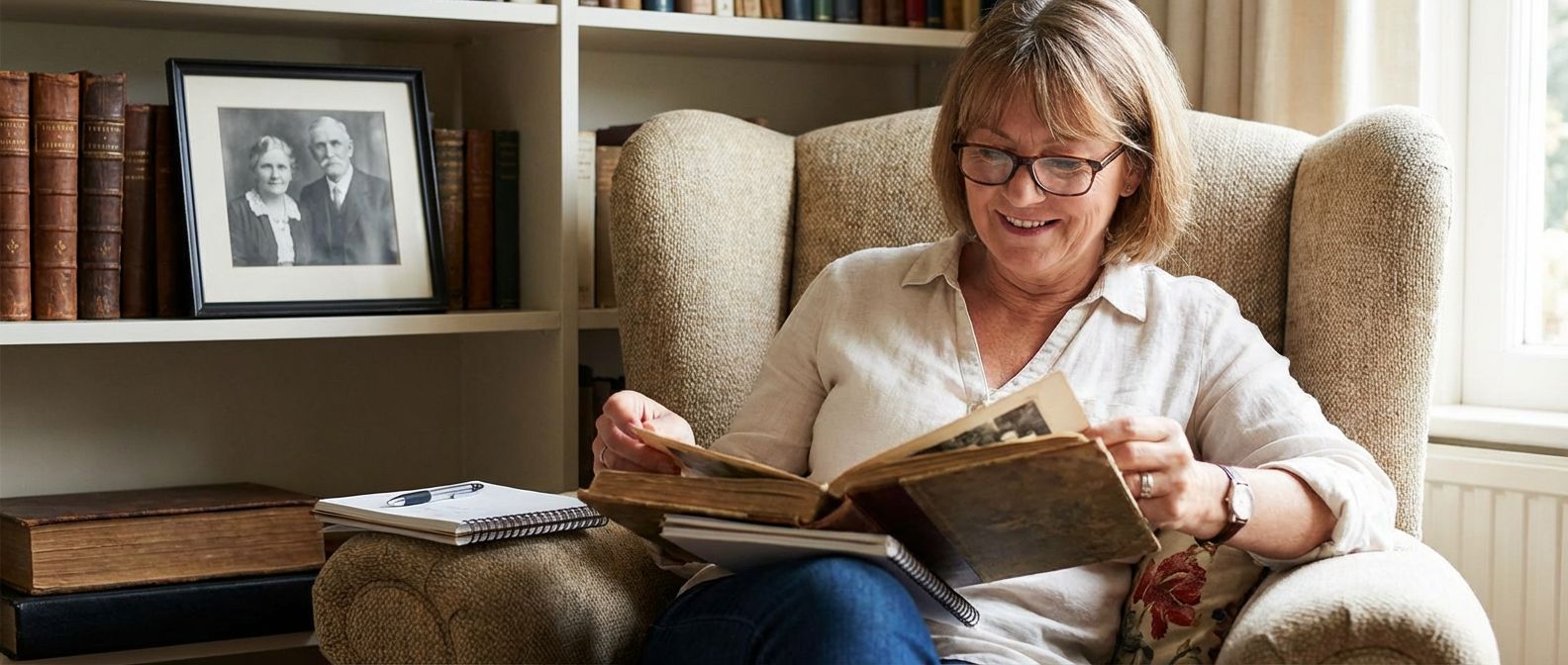
Every family loses stories when a generation passes. The way your grandmother hummed while she cooked. The reason your father always drove the long way home. The winter your parents almost didn't make it, and the neighbor who showed up with firewood. These details live in the minds of people who rarely think to share them, and in the memories of the people who were lucky enough to hear them once, maybe twice, before life moved on.
But preserving those stories doesn't have to be a burden on the people who lived them.
Most approaches to family memory preservation put the work squarely on the shoulders of the oldest generation -- the very people least likely to follow through. There is another way. One where you do the work, and the person you love receives something extraordinary without lifting a finger.
The Problem with Traditional Family Story Preservation
Most family story preservation products fail because they require the subject -- typically an older parent or grandparent -- to do all the work themselves.
The family memory preservation market is full of well-intentioned products. Prompted journals. Interview kits. Recording apps. Video memoir services. They all share a common assumption: the person whose story matters most will sit down, open up, and do the work.
Here is what actually happens.
You buy a beautifully designed prompted journal for your mother's birthday. She thanks you, sets it on the kitchen counter, and never opens it. Or she writes three pages in January and it sits in a drawer until the following December when she feels guilty about it.
You send your father a link to a recording app. He doesn't download it. You explain it again over the phone. He says he'll get to it. He doesn't get to it.
You book a video memoir session for your grandparents. They cancel twice because they "don't have anything interesting to say."
None of these products are bad. The problem is that they all require the subject to actively participate. And for a long list of very human reasons, most people simply won't.
Why Your Parents and Grandparents Resist
They typically do not think their life is interesting enough to record, find the technology uncomfortable, or feel overwhelmed by where to begin.
This isn't stubbornness. It isn't indifference. Understanding why people resist is the first step toward finding a better approach to preserving family history.
They Don't Think Their Life Is Interesting
This is the most common barrier, and the most heartbreaking. The person whose stories you desperately want to preserve genuinely believes nobody would want to hear them. They didn't climb Everest. They didn't start a company. They just lived. They don't understand that "just living" is exactly what makes their story worth preserving.
They Don't Like Technology
Recording apps, video calls, and digital platforms feel foreign and uncomfortable to many older adults. The technology becomes a wall between the person and the story. Even products designed to be simple still require downloading, logging in, and navigating an interface that wasn't built for them.
They Don't Know Where to Start
A blank page is paralyzing. Even prompted journals with hundreds of questions can feel overwhelming. Where do you begin a life? How do you decide what matters? The paradox of choice sets in, and the journal stays closed.
They're Too Busy Living
This one surprises people, but many retirees have full, active lives. Between grandchildren, hobbies, medical appointments, and social commitments, sitting down to record your life story feels like one more obligation. It's not urgent, so it never becomes a priority.
The Emotional Weight Is Real
Some stories are hard to tell. Revisiting certain memories -- loss, hardship, regret -- can feel like too much to ask of someone. Even joyful memories can carry an unexpected heaviness when you're the one being asked to narrate them.
The Alternative: You Tell the Story
You already carry decades of your family's stories in your own memory -- and services now exist that let you preserve them without asking the subject to participate at all.
What if preserving family stories didn't require your parents or grandparents to do anything at all?
Think about it. You already know their stories. Maybe not all of them, but more than you realize. You know the way your mother talks about her childhood best friend. You know why your father chose his career. You know the family recipes, the holiday traditions, the inside jokes, the turning points.
You are the living repository of decades of overheard conversations, dinner table stories, and late-night confessions. The stories are already in you. They just need somewhere to go.
This is the idea behind Life Stories by Edmund Grey. Instead of asking the subject to record their own story, you -- the son, daughter, or grandchild -- have a 25-minute conversation about the person you love. You share the stories you've been told, the memories you carry, and the details that make that person who they are.
Then we turn your words into a professionally narrated 40-minute audio biography and deliver it the same day.
Your parent or grandparent receives a finished, beautiful audio story about their life -- and they never had to do a thing.
How Edmund Grey Works
You have a 25-minute voice conversation sharing memories about a loved one, and receive a professionally narrated 40-minute audio biography delivered the same day for $39.
The process is designed to be simple and fast.
Step 1: Have a 25-Minute Conversation
You speak with Edmund Grey, a warm and patient interviewer who guides you through your memories. There is no script. No questionnaire. Just a natural conversation about the person you love -- their personality, their stories, the moments that shaped your family. You can do it from your couch, your car, or your lunch break.
Step 2: We Write and Narrate the Story
Using your conversation, we research your family's historical context and craft a 6,000-word narrative biography. The story weaves together your memories with cultural and historical detail, creating something richer than a simple transcript. It is then professionally narrated as a 40-minute audio production.
Step 3: Same-Day Delivery
You receive the finished audio story delivered to your inbox the same day. Share it however you like -- play it at a family dinner, send it as a gift, or save it for future generations.
The entire experience costs $39. One conversation. One payment. One extraordinary gift.
How to Prepare for Your 25-Minute Conversation
Spend fifteen minutes flipping through old photos and recalling the stories your family has told more than once -- that is all the preparation you need.
You don't need to prepare extensively, but a little reflection goes a long way. Here are practical tips to help you make the most of your conversation.
Flip Through Old Photos
Before your conversation, spend 15 minutes looking through family photos. Physical albums are best, but your phone's camera roll works too. Photos unlock memories you didn't know you still had. That vacation where everything went wrong. The backyard that looked so much bigger when you were small. The outfit your mother always wore.
Think About the Stories You've Been Told
Which stories has your family told more than once? The ones that come up at every holiday, every reunion, every long car ride. These repeated stories are often the most important ones -- they've been polished by retelling because they carry meaning the family returns to again and again.
Remember the Little Details
The big milestones matter, but the small details are what bring a story to life. How someone laughed. What they always said when they answered the phone. The meal they made when someone was sick. The song they sang in the car. These details are often the first things lost when a generation passes, and they are the things people miss most.
Don't Worry About Getting It Perfect
You are not writing a biography. You are having a conversation. If you forget something, that's fine. If you get a date wrong, that's okay. The goal is to capture the emotional truth of a person's life, not to produce a factual record. Speak from the heart and trust the process.
What Makes This Different
Edmund Grey is the only family story service where the gift-giver does all the work -- the person whose story is being told never has to participate.
Most family story preservation services record the subject telling their own story. Edmund Grey is the only service where the gift-giver does the work. The person whose story is being told doesn't need to sit for an interview, learn new technology, answer prompts, or carve out time from their day.
This matters because the people whose stories are most at risk of being lost are often the least likely to take action themselves. Not because they don't care, but because the barriers -- emotional, technological, motivational -- are real.
By shifting the work to the person who wants the story preserved, Edmund Grey removes every barrier at once.
Frequently Asked Questions
Do I need to know my parent's entire life story to do this?
Not at all. You know more than you think. Share whatever you have -- childhood stories they told you, memories from your own life with them, their personality and quirks. Edmund Grey's process is designed to draw out details you might not think to mention on your own, and our research fills in historical and cultural context.
What if multiple family members want to contribute?
Each conversation is one-on-one, but you can have multiple family members each create their own Life Story about the same person. Each one will be different because each relationship is unique. Some families find that combining perspectives creates an even richer portrait.
Is the audio story a recording of my conversation?
No. Your conversation is the raw material, not the final product. We use your memories and stories to craft a written narrative biography, which is then professionally narrated as a polished 40-minute audio production. The result sounds like a produced audiobook, not a recorded phone call.
Can I give this as a gift to someone who has already passed?
Yes. Many customers create Life Stories as a way to honor and remember someone who is no longer with them. The story becomes a lasting tribute that can be shared with future generations who never had the chance to know that person.
Every family has stories worth preserving. You don't have to wait for someone else to tell them.
Create a Life Story today at edmundgrey.com
Related Guides
- If you want a broader overview of the available approaches, How to Preserve Your Parents' Stories Before It's Too Late is the best place to continue.
- For service-level comparisons and gift framing, read StoryWorth Alternatives: 5 Better Options in 2026 and What Is a Life Story? The New Way to Give a Meaningful Gift.
Ready to create a Life Story for someone you love?
Start Free InterviewRelated Guides
Keep reading
25 Questions That Unlock People's Best Stories About Someone
Collecting memories for a tribute? These 25 questions help friends, family, and coworkers share real stories about someone instead of generic praise.
How to Organize a Group Gift Without Chasing People for Weeks
How to organize a group gift without chasing coworkers, cousins, or friends for weeks. A practical plan for deciding, collecting money, and delivering on time.
Audio Tribute vs. Video Montage: Which Group Gift Lands Harder?
Audio tribute or video montage for your group gift? An honest comparison of effort, participation, cost, and which format the recipient returns to.