Audio Tribute vs. Video Montage: Which Group Gift Lands Harder?
Audio tribute or video montage for your group gift? An honest comparison of effort, participation, cost, and which format the recipient returns to.
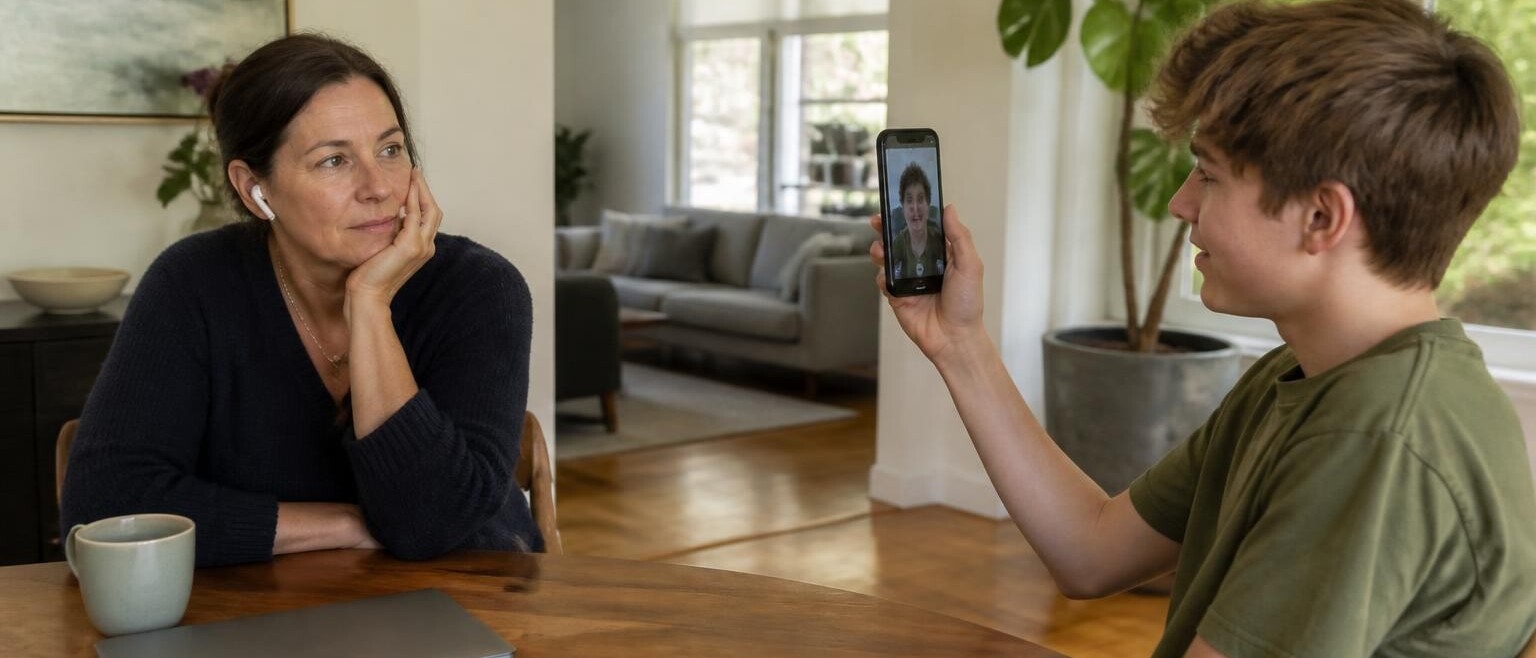
Someone in your circle deserves a proper tribute. A parent turning seventy, a colleague retiring, a friend moving across the country, a mentor stepping down. The group agrees: this calls for more than a card. Everyone should be part of it. Everyone's words should be in it.
At which point somebody says the obvious thing: "Let's all record videos and put them together."
The group video montage has become the default tribute of the last decade, and for understandable reasons. It is personal, it is collective, and everyone has a camera in their pocket. But if you have ever actually organized one, you know the gap between the idea and the result. Half the group goes silent when asked to film themselves. The clips that do arrive are vertical, horizontal, too loud, too quiet, forty seconds of "um, so, I was told to record something." And then one unlucky person — possibly you — spends a weekend in editing software trying to make it feel like one thing instead of nineteen things.
There is another way to build a group tribute: as audio. Not a folder of voice memos, but a produced, narrated story with everyone's memories — and everyone's voices — inside it. This article compares the two formats honestly: where video genuinely wins, where it quietly falls apart, and how to decide which one fits your group and your occasion.
Quick Comparison
| Video montage | Narrated audio tribute | |
|---|---|---|
| What contributors do | Film themselves on camera | Talk, voice only |
| Participation barrier | High — camera anxiety is real | Low — a few minutes of conversation |
| Who assembles it | A group member or an editing service | Professionally written and narrated |
| Final form | A sequence of clips | One continuous story with an arc |
| Faces and footage | Yes — its great strength | No — voices only |
| Typical lifespan | Watched at the reveal, revisited rarely | Listened to like an audiobook, returned to |
What Each Format Actually Is
A video montage is a compilation: each contributor records a short clip of themselves speaking to the camera, sometimes mixed with old photos and footage, and someone stitches the clips into one file, usually with music and title cards. Several online services have built businesses around smoothing this process — collecting the clips through a shared link and handling basic assembly — typically for a per-video fee.
A narrated audio tribute, in the form we are comparing here, is not a compilation but a composition. With Together from Life Stories by Edmund Grey, between 2 and 12 people each hold a private voice conversation with Edmund Grey, an interviewer who draws out their specific memories of the person — anywhere from two or three minutes to twenty, on any device, through one shared link. The service then writes and professionally narrates a single audio story about the person, roughly 20 to 30 minutes long, woven from everyone's memories, with every contributor in the story by name. Contributors can also leave a short spoken message at the end of their interview, and the ones that fit are heard inside the story in their own recorded voices. If the format is new to you, the full explanation lives in What Is a Together Tribute?
The difference in kind matters more than the difference in medium. One format collects performances; the other conducts interviews and writes a story from what they surface.
Where the Video Montage Wins
Fairness first, because video earns its popularity in several real ways.
Faces. Video shows the people. A grandmother watching her grandchildren grin into the camera is receiving something audio cannot replicate: expressions, gestures, the new haircut, how much the kids have grown. If the emotional core of your gift is seeing everyone, video is the right call — full stop.
Existing footage and photos. If your group sits on decades of photographs, home videos, and clips from past parties, a montage is the natural home for them. Audio has no way to use that archive.
Visual moments. Some tributes are built on things that must be seen — the terrible matching costumes, the championship point, the wedding dance. A story can describe these; a montage can show them.
Familiarity. Everyone understands what a tribute video is; the recipient knows what they are watching within five seconds.
Watchability at a party. A montage plays well on a screen in a room full of people — short, communal, built for the moment of the reveal.
Where the Video Montage Struggles
Camera anxiety shrinks your group. This is the quiet killer of montage projects. A meaningful share of any group — often the older members, often the shyest, often the ones with the deepest history with the recipient — simply will not film themselves. The tribute ends up missing exactly the voices it most needed. Speaking, by contrast, is something almost everyone will do; there is a reason people who freeze on camera talk freely on the phone.
The quality is uneven by nature. One clip is filmed against a sunset, the next in a dim kitchen with a dishwasher running. One contributor speaks for four polished minutes; another manages eleven awkward seconds. No editing pass fully hides this, and the recipient feels the seams.
Somebody has to make it into one thing. Either a group member donates a weekend and their patience to editing, or you pay a service to assemble it — and assembly is still sequencing, not storytelling. The clips play in a row; they do not build.
It is a clip reel, not a narrative. Twelve people saying "happy birthday, you are wonderful" twelve consecutive times has no arc. There is no through-line connecting the college roommate's story to the daughter's story, no shape, no ending that gathers everything up. The montage is a stack of greetings; it is rarely a portrait.
It tends to be watched once. Montages shine at the party and then live in a folder. Rewatching nineteen clips is a chore in a way that pressing play on a story is not.
Where the Audio Tribute Wins
Everyone can participate — actually everyone. No camera, no app, no scheduling, no writing, nothing to film. Each person opens a link on their own phone or computer, whenever suits them, and talks for as little as two or three minutes. The eighty-year-old aunt and the camera-shy college friend are suddenly in the tribute, and in it comfortably.
An interviewer beats a blinking red light. People handed a camera and told "say something nice" produce generalities. People asked good questions produce stories — how you met, the moment that sums them up, the thing they taught you without saying it. The private interview does the drawing-out that a montage leaves to chance, and because nobody can hear anyone else's interview, people say things they would never say into a group recording.
It arrives as one produced story. Instead of a sequence of clips, the recipient gets a single narrated story with a beginning, recurring themes, and an ending — closer to a beautifully made audio documentary about their life than to a stack of messages. Every contributor appears in the story by name, so the collective feeling survives the production.
Real voices inside the story. A Together tribute can carry the contributors' real voices — not summarized, not narrated over, but a person speaking directly to the recipient in their own recording, set inside Edmund's narration. Hearing a familiar voice arrive in the middle of half an hour of your own story is a different order of moment than watching a grid of clips. No video montage service puts real voices inside a narrated story this way.
It gets returned to. A half-hour narrated story fits the way people already listen — on a walk, in the car, with headphones at night — the kind of piece a person returns to like a favorite album. The listening page stays live for a full year, with a cover carrying every contributor's name and a signed-by wall.
The cost is legible. Together is $49 including two contributor seats, with each additional contributor at $3.90, up to twelve people — a full group of twelve comes to $88, about $7 per person. Video services vary, but between per-video fees and paid editing, a polished montage often ends up in a similar or higher range, with the editing labor still landing on someone.
Where Audio Falls Short
Honesty cuts both ways. Audio has no faces — if seeing the grandchildren is the point, choose video. It cannot absorb your existing photos and footage. Half an hour asks more of the recipient than a five-minute montage does, and while that depth is the point, it makes audio better suited to a personal listen than to background play at a loud party — many groups reveal the story in a quiet moment, or play a favourite passage at the gathering itself. And the format is newer: part of your gift is introducing the recipient to something they have not seen before, which is a feature at the reveal but does require a sentence of explanation.
How to Choose Between Them
Choose the video montage when the tribute is fundamentally visual: the group has footage and photos worth showing, the contributors are comfortable on camera, and the goal is a short, communal moment on a screen at a gathering.
Choose the audio tribute when the tribute is fundamentally about what people have to say: when the group includes camera-shy or older contributors you cannot afford to lose, when nobody wants to inherit the editing, and when you want the recipient to end up with a keepsake they return to rather than a file they watched once.
A useful test: imagine the recipient one year after the occasion. If the image that moves you is them showing the video to a visitor, choose video. If it is them on a long drive, listening to the story of their own life told through the people who love them, choose audio.
Frequently Asked Questions
Is an audio tribute better than a tribute video?
Neither is better in the abstract; they solve different problems. A video montage is stronger when faces, photographs, and existing footage are the heart of the gift and the group is comfortable on camera. A narrated audio tribute is stronger when full participation matters — voice-only contributions remove camera anxiety — and when the group wants a single produced story rather than a sequence of clips. Audio tributes such as Together can also carry the contributors' actual voices speaking directly to the recipient, which is the moment video montages cannot reproduce inside a narrated story.
What is the biggest problem with group tribute videos?
Participation. In most groups, a significant number of people are uncomfortable filming themselves and will delay or quietly opt out, so the finished montage is missing voices that belonged in it — often the oldest and closest ones. The second problem is assembly: the clips arrive in every possible format and quality, and someone must edit them into one watchable piece or pay a service to do so.
How does a group audio tribute work?
With Together from Life Stories by Edmund Grey, an organizer pays once and shares a single link with 2 to 12 contributors. Each person opens the link on any device, at any time, and holds a private voice conversation with Edmund Grey, an interviewer, for between roughly two and twenty minutes — no camera, no app, no writing. The service then writes and professionally narrates one audio story about the person, around 20 to 30 minutes long, built from everyone's memories, and able to carry the contributors' real voices inside it. The organizer previews it, can request the included round of corrections, and shares it with the recipient whenever they choose.
Can you do both an audio tribute and a video montage?
Yes, and for large milestone occasions some groups do: a short montage for the party screen, and a narrated audio story as the lasting keepsake. If the budget only stretches to one, decide based on your group — if losing the camera-shy contributors would hollow out the tribute, audio protects them; if the gift depends on faces and footage, video does.
If your group has more to say than a camera will let them say, Together from Life Stories by Edmund Grey turns 2 to 12 private voice interviews into one professionally narrated 20–30-minute story that carries everyone's real voices — from $49. Start a Together tribute at edmundgrey.com.
Related Guides
- New to the format? Start with What Is a Together Tribute? The Gift Where Everyone's Voice Is in It.
- Comparing specific services instead of formats? See Tribute and VidDay Alternatives for Group Gifts (2026).
- Organizing the group itself is half the battle — How to Organize a Group Gift Without Chasing People for Weeks covers the logistics.
Ready to create a Life Story for someone you love?
Start Free InterviewRelated Guides
Keep reading
Tribute and VidDay Alternatives for Group Gifts (2026)
Looking for a Tribute.co or VidDay alternative? Six group gift options compared for 2026 — narrated audio stories, group cards, photo books, and more.
StoryWorth Alternatives: 5 Better Options in 2026
Looking for a StoryWorth alternative? We compare the best options in 2026 — from audio biographies and video keepsakes to DIY approaches — so you can find the right way to preserve your family's stories.
40th Birthday Gift Ideas Your Friend Group Can Actually Pull Off
Planning a 40th birthday gift with your friend group? These group gift ideas actually get organized — from pooled trips to a story told in everyone's voices.